










We couldn’t find what you are looking for. Please try another way.
The Multiverse blog
Thank you! Your submission has been received!
Oops! Something went wrong while submitting the form.
What we know about the Government's AI Opportunities Action plan
Employers
Ellie Daniel
Prime Minster Keir Starmer wants to “unleash AI” - promising to drive adoption and deploy AI widely across the public sector, from reducing admin for teachers to assessment and diagnosis in the NHS.
What will this mean in practice for employers? In this article we’ll explore the AI Opportunities Action Plan and what this means for the skills agenda in the UK.
What’s included in the AI Opportunities Action plan?
The plan was commissioned by the Government and developed by tech entrepreneur Matt Clifford. It includes 50 recommendations, with the goal of boosting economic growth and improving people's everyday lives by supercharging AI adoption.
Improving living standards and transforming public services are called out as key ambitions of the plan – which is made up of three pillars:
- Lay the foundations to enable AI: including the development of ‘AI Growth Zones’, the creation of a National Data Library (unlocking data sets to enable training of new models), as well as training, retaining and attracting talent.
- Change lives by embracing AI: pushing public sector adoption by piloting and scaling AI products and services, while encouraging the same in the private sector.
- Secure our future with homegrown AI: ensuring the UK has national champions through a new unit, UK Sovereign AI.
“In the coming years, there is barely an aspect of our society that will remain untouched by this force of change,” said Prime Minster Keir Starmer, in part of the government’s response to the recommendations, which sets out how the government will take forward the 50 recommendations included in the plan.
In practice, it’s hoped AI will enable public sector workers to spend less time on admin and more on delivering services. The opportunity for public benefit is huge: ranging from automated pothole inspection to faster cancer diagnosis.
The Prime Minister has now tasked his cabinet to make AI adoption a top priority for their Departments.
The Multiverse take: AI tools are only as powerful as the humans that wield them
The focus on skills and talent in the action plan is welcome – AI adoption must start with skills.
Here’s what Euan Blair, Founder and CEO of Multiverse, said following the announcement:
“Being first to mass adoption is just as important as being first to innovation. We may have missed the first-mover advantage on LLMs and data centres, but it’s encouraging to see the UK Government recognises its other unique opportunity: to be first to implement AI at scale.
“None of the AI action plan can happen without a substantial investment in skills, since AI tools are only as powerful as the humans who wield them.”
Multiverse engages regularly with policymakers and will offer advice as the recommendations are taken forward.
What will happen next?
The plan sets out how the country can train, attract and retain the next generation of AI scientists and founders in a set of recommendations. These include:
- Accurately assessing the size of the national skills gap, including AI and digital skills, by Spring 2025
- Setting out how the UK will attract highly skilled AI workers from abroad in the Industrial Strategy, by Summer 2025
- Ensuring the lifelong skills programme is ready for AI by assessing the importance of digital and AI skills in the curriculum, by Autumn 2025
- Establishing headhunting capability to bring top AI talent to the UK, by Autumn 2025
- Increasing the diversity of the talent pool with a focus on improving gender balance, starting at school level, by Autumn 2026
- Expanding education pathways into AI, by Autumn 2026
- Launching an undergraduate and master’s AI scholarship programme, by Autumn 2026
- Expanding the Turing AI Fellowships offer, by Autumn 2026
- Increasing the number of AI graduates and teach industry-relevant skills, such as AI-related degrees in Higher Education, by Autumn 2027
What should employers do on AI skills?
Considering 51% of workers have received less than five hours of AI training – according to our ROI of AI report, there is a clear opportunity for employers to upskill their workforce on AI.
Equipping people with the skills and confidence to use AI will spur further growth - as workers start to see how the technology can reshape their day-to-day.
For leaders wanting to bring AI into their company, understanding skills gaps is the first port of call.
What we know about the Government's AI Opportunities Action plan
Employers
Ellie Daniel
Prime Minster Keir Starmer wants to “unleash AI” - promising to drive adoption and deploy AI widely across the public sector, from reducing admin for teachers to assessment and diagnosis in the NHS.
What will this mean in practice for employers? In this article we’ll explore the AI Opportunities Action Plan and what this means for the skills agenda in the UK.
What’s included in the AI Opportunities Action plan?
The plan was commissioned by the Government and developed by tech entrepreneur Matt Clifford. It includes 50 recommendations, with the goal of boosting economic growth and improving people's everyday lives by supercharging AI adoption.
Improving living standards and transforming public services are called out as key ambitions of the plan – which is made up of three pillars:
- Lay the foundations to enable AI: including the development of ‘AI Growth Zones’, the creation of a National Data Library (unlocking data sets to enable training of new models), as well as training, retaining and attracting talent.
- Change lives by embracing AI: pushing public sector adoption by piloting and scaling AI products and services, while encouraging the same in the private sector.
- Secure our future with homegrown AI: ensuring the UK has national champions through a new unit, UK Sovereign AI.
“In the coming years, there is barely an aspect of our society that will remain untouched by this force of change,” said Prime Minster Keir Starmer, in part of the government’s response to the recommendations, which sets out how the government will take forward the 50 recommendations included in the plan.
In practice, it’s hoped AI will enable public sector workers to spend less time on admin and more on delivering services. The opportunity for public benefit is huge: ranging from automated pothole inspection to faster cancer diagnosis.
The Prime Minister has now tasked his cabinet to make AI adoption a top priority for their Departments.
The Multiverse take: AI tools are only as powerful as the humans that wield them
The focus on skills and talent in the action plan is welcome – AI adoption must start with skills.
Here’s what Euan Blair, Founder and CEO of Multiverse, said following the announcement:
“Being first to mass adoption is just as important as being first to innovation. We may have missed the first-mover advantage on LLMs and data centres, but it’s encouraging to see the UK Government recognises its other unique opportunity: to be first to implement AI at scale.
“None of the AI action plan can happen without a substantial investment in skills, since AI tools are only as powerful as the humans who wield them.”
Multiverse engages regularly with policymakers and will offer advice as the recommendations are taken forward.
What will happen next?
The plan sets out how the country can train, attract and retain the next generation of AI scientists and founders in a set of recommendations. These include:
- Accurately assessing the size of the national skills gap, including AI and digital skills, by Spring 2025
- Setting out how the UK will attract highly skilled AI workers from abroad in the Industrial Strategy, by Summer 2025
- Ensuring the lifelong skills programme is ready for AI by assessing the importance of digital and AI skills in the curriculum, by Autumn 2025
- Establishing headhunting capability to bring top AI talent to the UK, by Autumn 2025
- Increasing the diversity of the talent pool with a focus on improving gender balance, starting at school level, by Autumn 2026
- Expanding education pathways into AI, by Autumn 2026
- Launching an undergraduate and master’s AI scholarship programme, by Autumn 2026
- Expanding the Turing AI Fellowships offer, by Autumn 2026
- Increasing the number of AI graduates and teach industry-relevant skills, such as AI-related degrees in Higher Education, by Autumn 2027
What should employers do on AI skills?
Considering 51% of workers have received less than five hours of AI training – according to our ROI of AI report, there is a clear opportunity for employers to upskill their workforce on AI.
Equipping people with the skills and confidence to use AI will spur further growth - as workers start to see how the technology can reshape their day-to-day.
For leaders wanting to bring AI into their company, understanding skills gaps is the first port of call.
Multiverse bolsters VP team with Spotify engineering head and edtech founder
News
Team Multiverse
Following on from the recent appointment of Jillian Gillespie as CFO and Martha Lane Fox to the board, the tech credentials of the new VP appointees underline Multiverse’s ambitions to be a generational technology company.
Helen Greul joins Multiverse from a varied career at Spotify, having most recently headed up its open source Backstage product, which streamlines workflows for developers. Prior to this she worked on the infrastructure of Spotify’s content platform, contributing to the successful launch of Podcasts in 2018. With more than 15 years in the tech industry Helen will help supercharge Multiverse’s high-performing engineering team, enabling Multiverse to deliver its AI-driven education platform to learners across the world.
She said, “Growing up in a family of educators, I understand the transformative power of education. In the current macro economic environment where upskilling is a necessity for every field, I’m looking forward to creating a learning experience in which the next generation of talent can learn the skills they need to thrive.”
Asha Haji, meanwhile, joins Multiverse having successfully built and exited her own edtech company, Framework, prior to which she spent almost seven years at Education First. In her time as an entrepreneur she secured investment from Google’s Black Founders Fund and earned a finalist slot in Harvard Business School’s New Venture Competition. Haji also secured funding from VCs, founders and CxOs behind the likes of Netflix, Calm and YouTube. Having reskilled many times, working in everything from sales and partnerships, to talent acquisition and product management, she is well-placed to steer Multiverse to success in its operations.
She said, “I'm passionate about helping people from all backgrounds grow further in their careers and develop technical aptitude, so I’m hugely excited by Multiverse’s mission. I’m looking forward to helping it tackle the problem of delivering high quality, applied learning at scale.”
Euan Blair, Founder and CEO of Multiverse, said: “Continuing to build a world-beating senior team is essential for Multiverse to achieve its ambitions. I’m beyond excited to be welcoming two more brilliant individuals to the organisation, who will help continue our rapid growth in the right way and enable us to realise our far-reaching ambitions.”
What is strategic workforce planning, and how can it close skills gaps?
Employers
Claire Williams
By definition: workforce planning aligns people with current and future business needs, through analysing, forecasting, and mapping workforce supply and demand.
The purpose of workforce planning is to identify current or emerging skills gaps, prepare for future talent needs, and help manage under or over-resourcing.
In this article, we’ll explore everything you need to know about workforce planning, and how to use it to build a future-proof business.
Benefits of workforce planning
There are many benefits to strategic workforce planning, including:
- Aligning your people strategy with your business goals: Ensuring the right people – with the right skills – are in place to support the company’s goals and strategy.
- Preparing for the future: By anticipating workforce challenges and trends, adapting to changes in the market, and developing succession planning.
- Maintaining cost and resource efficiencies: By investing strategically in hiring and training to ensure each team and department has the right level of resource.
- Making data-driven decisions: Using data to make informed choices on talent and training programmes.
The importance of workforce planning today
Businesses will fall behind if they don’t have the right skills in place. Workforce planning is a means to address this challenge – let’s explore the trends reinforcing its importance.
Many leaders are looking at how to future-proof their workforce – with workforce planning one way to identify and tackle AI skills gaps. More than two thirds of leaders (69%) feel their organisation will need different skills to stay competitive by 2030, according to Multiverse. Taking this a step further, a study from IBM found that 40% of workers will have to reskill in the next three years due to AI.
Workforce planning can also be used to address productivity blockers, by mapping out skills gaps and creating a plan to close them. In a Multiverse study, we found an estimated 25 days of productivity are lost from each employee due to data skills gaps, every year.
High employee churn and lower engagement are additional challenges: one study found 90% of UK employees are disengaged from their job. Skill mismatches are one cause – meaning some employees feel their abilities are underutilised or don't align with their current roles.
In response, workforce planning can improve happiness and engagement. It places employees on tasks and projects that are a better fit for their skillset and desired development pathway – and are therefore more fulfilling.
How workforce planning can close skills gaps
The AI era is fuelling a surge in new roles – AI job postings are growing 3.6 times faster than all jobs in the UK, according to PWC’s 2024 AI Jobs Barometer. It puts AI skills high in demand, creating a tight labour market.
For leaders looking to build the right AI skills within their workforce, upskilling existing employees talent may provide a faster, more cost-efficient method than external hiring.
And the appetite from employees is there: 83% of workers think developing their AI skills will help them to drive more value for their employer in the next 12 months.
Workforce planning process – how to do it
The workforce planning process generally follows these steps in a continuous feedback loop:
Workforce planning in a 7-step cycle:

Workforce planning tools and techniques
Now let’s explore how to approach tools and techniques for workforce planning.
The ‘five Rs’ framework is commonly used to align a businesses’ workforce to its goals: ensuring the organisation has the Right People, Right Skills, and Right Roles, at the Right Time, and the Right Cost.
Building on that foundation, real-time monitoring tools can be used to assess productivity, attendance, and engagement levels of employees. Companies can use skills intelligence tools to quickly assess workforce skills and capabilities (like AI), and use this data to inform Learning and Development strategies.
For example, HR teams may decide to build in-demand skills within its existing workforce while flexibly using contract workers for short-term needs – using a model that balances cost, quality, and agility.
Get started with strategic workforce planning
As the era of AI continues to heat up, so will the pressure to find and plan to have the right talent in place. Strategic workforce planning can help you spot what’s needed for success today, while being ready for the challenges of tomorrow.
What is a skills inventory? 5 steps to create yours
Employers
Claire Williams
HR and L&D teams can use a skills inventory as a tool to identify skill gaps, simplify talent management, and support strategic workforce planning.
Crucially, a skills inventory reveals to leaders the specific capabilities that need to be developed to hit company goals.
In this article, we’ll explore everything you need to know about a skills inventory, how to build one, and an example of how one company used a skills analysis to improve efficiency on data tasks.
What is the purpose of a skills inventory?
There are three main reasons for developing a skills inventory:
- Identifying skills gaps which could be holding you back from growth. A skills inventory helps to quantify the scale of the challenge and the action you need to take.
- Informing your learning and development strategy by pinpointing the areas that need the most focus. It also supports the creation of tailored employee development plans that support the overall business goals.
- Creating new opportunities for employees: As well as identifying the skills that employees need to build, a skills inventory can also uncover hidden or underused talent in your workforce – allowing you to open up new upwards or sideways progression pathways for individuals.
What is the difference between a skills inventory and a skills matrix?
Both of these tools can be used to address skills gaps and support your workforce transformation strategy. However, they have key differences:
- A skills inventory is a dataset of all employee skills across a whole organisation.
- A skills matrix focuses on specific skills relevant to individual roles or departments, and includes the scoring captured in the evaluation process.
How to create a skills inventory in 5 steps
Now we understand what a skills inventory is for, let’s look at how to build one.
1) Establish the business goals you want to achieve
Start by setting out the overarching goals and how you hope skills can help you achieve them. One way to do this is by writing a problem statement that explains the challenge you want to overcome. The statement should factor in:
- What is the problem blocking you from?
- What value would solving the problem unlock?
- How will that challenge change if unresolved in the next 12 to 18 months
- How can skills help you reach the goal, or goals, that you want to achieve?
2) Identify the skills needed to hit your goals
To answer your problem statement, next consider what capabilities your workforce will need to achieve your goal outcome.
Group these into skill sets and organise into broader categories, such as soft skills, technical skills, and leadership skills. Qualifications and certifications can also be factored into a skills inventory.
Find out more on the differences between soft skills gaps and technical skills gaps in our guide: ‘What is a skills gap?
3) Conduct an employee skills assessment
Decide on the best way to test or assess the skills of your workforce. Different methods include employee self-assessment (either manually, or using a dedicated skills intelligence tool), skills tests, and performance reviews.
Next, rate proficiency for each skill using a uniform scale (such as 1 to 5) to establish a consistent benchmark.
If you choose to interview one-to-one or if employees are self-evaluating, here are some questions to include:
- What skills do you have that the company could use more effectively?
- How do you rate your proficiency on [skill] out of five?
- Where do you want to focus your personal development in the next six months?
4) Map the results in a skills matrix
The evaluation results can be captured in a skills matrix at an employee, team, or department level.
The tool gives managers and leaders a view of proficiency levels of the desired skills, clearly showing strengths and skills gaps.
Discover our guide: What is a skills matrix?

5) Regularly update your inventory
With skills gaps identified, update your inventory data and treat it like a live document – for example, making updates when an employee training programme has finished and there’s new self-assessment data from employees to input. This is an opportunity to measure the programme’s impact, calculate ROI on employee training and inform your next steps.
Another check-in point is when there are changes and updates to the business strategy. Always think: how will this impact the roadmap of skills you need? Make sure any new requirements are captured in your skills inventory.
Skills inventory example: EDF Energy
Let’s look at how EDF Energy was able to identify their workforce skills gaps and create a skills inventory, with support from Multiverse.
A Multiverse skills analysis assessed EDF employees who use data daily – and it found they were spending 19.9 hours a week on data tasks.
The analysis mapped employee skill levels in areas like predictive modelling, engineering data, producing visualisations, managing spreadsheets and analysing data.
The exercise revealed 50% in potential time savings which could be achieved through data upskilling.
To capitalise on these efficiency gains, EDF launched a Multiverse Data Academy programme, enrolling staff on apprenticeships to build data skills.
Use a skills inventory to close skills gaps
A regularly updated skills inventory supports strategic workforce planning.
By following these steps, leaders can get the right people working on the right projects, faster.
Specific skill gaps can be targeted through learning and development programmes. And leaders can identify the skills needed to stay competitive and ahead of the curve.

Improving data literacy in the public sector: 5 lessons from Ealing Council and North London NHS Foundation Trust
Employers
Gabriela Wasilewska
Unblocking digital transformation can improve operations in public services – and ultimately better serve the taxpayer. So what can leaders do to drive their digital transformation approach forward?
We recently held a virtual roundtable with representatives from local authorities and the NHS to discuss methods for unlocking success in digital transformation.
We heard from Sarah Wilkins, CDIO for North London NHS Foundation Trust, Tony Clements, CEO at Ealing Council, and Euan Blair, Founder & CEO at Multiverse, on how data and AI strategies can help overcome digital challenges and deliver a seamless service to local communities.
If you’re short on time, these are our five takeaways from the session:
1. Collaboration creates better citizen outcomes
Collaboration is critical for NHS Trusts and local government. It helps continue service between health and social care, resulting in the best patient outcomes.
Tony already has ideas about how to bridge the data divide using AI. He said: “We're in a trial cohort at the moment of designing a generative AI tool that takes social workers’ notes and relational data, turning them into formats that work for clinicians.”
He hopes to remove technology boundaries between the NHS and councils, creating a robust and personalised approach to care.
Sarah told us how the Trust supports collaboration by participating in schemes like the London Care Record. The system shares patient data across organisations to support integrated care.
Gradually, greater collaboration helps to bridge professional, cultural and informational gaps between public services – all to provide better outcomes for local communities.
2. Data is most effective when strategically integrated
Public sector bodies have the opportunity to better integrate data into workflows – helping drive greater productivity and improve decision-making.
Sarah explained: “We’re drowning in data, but we weren’t always using it intelligently, to generate the insights that we need.” To develop the skills to use data more strategically, the Trust partnered with Multiverse to start a Digital Academy, funded by the Apprenticeship Levy.
Today, clinical teams can use their caseload management tool, MaST, to identify patients at risk of going into crisis. It helps them allocate resources accordingly and reduce hospital admissions.
Ealing Council is also taking action to improve its digital transformation approach by enrolling 45 employees in a data academy, with the hope of expanding the partnership further.
Tony says the area is ripe for collaboration: “There's a real opportunity to combine NHS and wider local authority data so that we can move away from some of those lag indicators and move towards earlier predictions.” For example, the team has started using predictive analytics to predict which residents might enter into adult social care soon.
3. AI can accelerate productivity and performance
Teams are also integrating AI into workflows to boost productivity in the public sector.
At Ealing Council, teams use a tool called Magic Notes to minimise the administrative workload associated with adult social work. AI also helps to identify the need for practical interventions - if a final assessment doesn’t match the evidence, the system flags discrepancies for Ealing’s social workers to review.
Tony told us: “The more we can get our social workers doing what they do best, which is working in people’s homes on the things that matter to them, the better.”
Despite some initial scepticism, teams now understand that AI can have significant benefits for their own workloads. Sarah told us: “It's about removing that admin burden from clinicians and freeing them up to work to the top of their licence – and do the things that only they can do as clinicians.
“It helps them focus their attention on the caseload that’s most in need, and give those patients better outcomes.”
4. Upskilling is a critical tool for building data literacy
Sarah and Tony both highlighted the critical role of upskilling to build data literacy. Training enables learners to better interpret data and apply it to decision-making around service design.
Alongside formalised learning, Tony stressed the importance of a distributed model for the training and adoption of new data and AI tools. He explained: “I'm not a chief exec that's going to come in with a centralised transformation programme designed in the back room by a bunch of consultants. Our approach is to put tools directly into people's hands and to establish those use cases through practice.”
He explained: “We’ve been experimenting with Microsoft Copilot, with 300 of our staff initially given licences, to use in the ways that they feel best work for their area of business. We’re bringing that together in what we've called our centre of excellence – where staff learn from each other how they’re using the new tool, and then spread that knowledge and skills laterally, as much as top down.”
Euan agreed with the two-pronged approach, accounting for both tech and skills: “If we want to benefit from the huge potential technology offers, we have to train and skill the incumbent workforce. Tech tooling can create huge amounts of value, but only if it's implemented and people understand it.”
5. Buy-in is needed from top to bottom of the org chart
The panel spoke about the importance of building a future-ready workforce and a culture of continuous learning. But to build that foundation, you need buy-in at all seniority levels.
Sarah stressed the importance of bringing end-users along for the journey, demonstrating the value of digital skills and systems. She said: “It really is about empowering all levels of the organisation. It can't just be top down, or you meet resistance.”
Executive sponsorship for change initiatives is essential. As Euan put it: “You need clear sponsorship from the business at the leadership level across technology and data. If it ends up being an HR and L&D effort only, then it often ends up not fully delivering everything it can.”
For Tony, it’s about change leadership and managing a gradual process: “You can't always get enough buy-in. So sometimes, you've just got to take a moment, be conscious that you are probably pushing the organisation a bit further than it's ready for, and then be prepared to pick up the pieces.”
Digital transformation in public services isn’t just about investing in new technology – people and skills are critical to success. To learn how to boost productivity, deliver better outcomes for communities, and create new opportunities through data and AI skills, speak to our specialist team.
Managing the risks and rewards of AI: Lessons from Capita and PA Consulting
Employers
Gabriela Wasilewska
Appetite for AI in business is high, and 98% of leaders believe the benefits have met or exceeded their expectations. But understanding of AI – and the skills to use it – remains inconsistent in the workforce.
Generative AI throws another curveball into the mix. Employees are already actively experimenting with ChatGPT, without necessarily understanding best practice.
In this complex picture, what’s the best way to equip employees with AI knowledge that will deliver value for the business – and manage the risks?
At our recent panel, Bridging the AI gap: From classic challenges to generative opportunities, leaders looked to answer just that.
David Reed, Chief Knowledge Officer at DataIQ, chaired the session featuring PA Consulting’s Global Head of AI, Alwin Magimay, Capita’s Director of Operational Excellence, Edward Boyns and Multiverse’s Head of AI, Anna Wang.
Build AI skills in the business with formal learning pathways
AI tools are becoming more commonplace in every organisation. 81% of tech leaders plan to increase AI investment in the next three years and beyond.
But people will be crucial for AI to deliver on its promise – and to date, the majority of workers (51%) have received fewer than five hours’ training on AI.
For both Capita and PA Consulting, building capabilities in the workforce by training existing employees is crucial. As Ed explained, AI is a central part of the business transformation strategy underway at Capita.
“We need to educate our own people on how to use AI and extract value from it, because we need to practise what we preach to sell it to our clients in a compelling way,” Ed explained.
“We now have a cohort of 95 apprentices, working on a Multiverse programme. It’s about teaching our organisation how to get the most value from AI, for us and our clients.”
Find out how Capita launched a new AI training Academy in partnership with Multiverse, delivering AI apprenticeships for more than 100 colleagues
Upskilling is part of an equitable value exchange with employees for PA Consulting, according to Alwin. “We aim to give as much as we receive to our staff. We keep things interesting with a 70:20:10 ratio of time spent on consulting, research and personal development respectively, including learning AI skills.”
With an AI-enabled workforce, businesses can realise the value of their investments – and support employee satisfaction and retention.
Nine in 10 employees are keen to improve their data skills, and 83% say AI skills will help them to drive more value for their employer in the next 12 months.
Teach employees when to use AI for the best ROI
Generative AI has introduced a new dynamic for businesses – by significantly lowering the AI barrier to entry.
“The biggest innovation of ChatGPT is that it put this technology into the hands of everyone,” Anna explained. “Any person can now tell a computer what to do and what not to do. That breakthrough really levels the playing field.”
There are parallels with past technologies. In the 1900s, you had to be a mechanic to drive a car, Alwin highlighted. Now, you can just focus on the driving – you don’t need to understand what’s under the bonnet.
In the same way, employees at all AI skill levels have direct access to the tools and are keen to use them. Most workers have gained their AI skills by playing with ChatGPT (61%) or learning on the job (59%).
But context is everything. According to David, “It’s not just understanding how to use the tools and technology. It’s also when it’s appropriate and when it isn’t.”
Alwin explained, “The tasks we do at work tend to fit into four quadrants: bespoke, curator, repeatable, predictable. AI is best applied to tasks that are repeatable and predictable – the low-hanging fruit.”
To leverage AI to its full potential, workers need to understand this cost/benefit analysis – to see where the technology will add value, and where it won’t.
As Ed noted, “Be really clear on what your costs are from an AI perspective. Don't start with AI being a solution that you really like, and you're going to try and find a problem to fix with it.”
Managing AI risks: key questions to ask
Many businesses lack clear guardrails over how AI is used. Only 28% of leaders are confident they have established best practice in providing governance structures to limit AI risk.
“The main challenge of using generative AI is data custody,” explained Anna. “The data input shouldn’t be confidential. Consider the malicious applications of the data, the potential for impersonation and vulnerability to cyber-attacks. There are a lot of risks.”
Ensuring a system is fair, transparent, responsible and accurate depends on knowing the questions to consider.
“For each application, you have to explain what AI tools are involved and how you’re going to use it,” explained Ed. “Are you going to store the data? Are you going to let the data be used to teach the model?”
Employees need to understand the impact of how AI is used, but many lack foundational data skills. 57% have no or basic Excel skills – and as David noted, this means businesses may be “trying to run with AI before they can walk.”
Nine in 10 employees want to improve their data skills – and this could unlock greater productivity, as well as increasing their understanding of the implications of different AI uses.
Ensure AI upskilling is consequential, with a clear business ROI
AI projects must deliver meaningful and measurable results for businesses. Likewise, upskilling programmes have to be tailored to benefit the organisation, and not only the individual.
As Anna explained, “The vision of Multiverse is to make learning more scalable, personal and consequential for every business.”
Ed has worked closely with the AI apprentices at Capita, helping to shape the project proposals they are developing in the programme. “We can make sure that they will drive value, and they are looking at problems that are significant to the organisation, that are scalable, and can drive value for Capita.”
AI is in turn helping to reimagine the learning process at Multiverse. Atlas, an always-on copilot, has also been supporting learners on Multiverse apprenticeships since early 2024.
With personalised learning pathways, upskilling can deliver for both individual students and the business as a whole.
Read more examples of AI upskilling in practice
Our panel was clear that AI holds great promise for businesses. But people need the skills and understanding to use the technology to its full potential, and proactively mitigate risk.
Training programmes that are directly tied to business benefits will not only support individuals, but deliver better outcomes for the whole business– as Capita and PA Consulting show.
To learn how upskilling can deliver meaningful business results for you, watch the full panel and explore our AI courses for business.

The University of Manchester partners with Multiverse to build digitally confident and AI-literate workforce
News
Team Multiverse
The University of Manchester is launching AI and data programmes for 70 professional services staff through a new Data & AI Academy, in partnership with Multiverse. This new initiative is part of a drive from the University to better leverage its technology tools and data.
The development of these skills will increase staff efficiency through the automation of manual processes and future proof the workforce for the next decade. The ambition of the Data & AI Academy is to expand across the University’s professional services teams in 2025.
Training is funded by the apprenticeship levy and delivered by Multiverse, a tech company that specialises in high-quality training through applied learning. Multiverse has trained more than 16,000 apprentices at over 1,500 organisations in data, AI and digital skills since 2016.
Programmes include ‘AI for Business Value’, which will help learners to identify operational and commercial gains that can be achieved through using AI responsibly. This will allow them to design AI solutions with key areas like student experience and organisational development in mind.
The ‘Data Fellowship’ will upskill employees in data analysis and help the University develop a team of data specialists to implement its 10-year futureproofing framework. Meanwhile ‘AI Powered-Productivity’ will help teams to boost their output at work through the use of Microsoft 365 Copilot. This will be crucial to help deliver value from the University’s forward-looking investment in the technology.
According to Multiverse’s Skills Intelligence Report, the education sector is most impacted by a lack of data skills, with 38% of employees’ time working with data spent unproductively, compared to the average of 30% across 18 other sectors.
The University of Manchester’s Data & AI Academy will lead the way in mitigating this risk by offering tailored training programmes to enhance data analytics and AI skills among staff. This will foster a more data-driven workforce that can effectively leverage technology to improve student experiences.
PJ Hemmaway, Chief Information Officer at The University of Manchester said: “I’m thrilled to be partnering with Multiverse to offer these unique and highly relevant professional development opportunities to our colleagues. Together, we have developed an approach to increase our digital confidence around data and AI which will help us immensely to prepare for the challenges that lie ahead.
“Data and AI skills will be critical in the future and I’m eager to see the first cohort of colleagues upskill and learn how to harness the power of innovative technologies for the benefit of our University community and our student experience, as we prepare ourselves for what’s to come.”
Robert Williams, Apprenticeships Programme Manager at The University of Manchester said: “We are excited to join forces with Multiverse to introduce the Data and AI Academy, a dynamic addition to our growing apprenticeship offering at the University of Manchester. This partnership underscores our commitment to supporting staff development and highlights the vital role apprenticeships play in driving personal and professional growth across our institution”
Euan Blair, CEO at Multiverse said: “The University of Manchester is adopting a strategic approach to give its skilled teams more time, enabling them to concentrate on what truly matters. Already recognised as a leading institution for students, this new academy demonstrates its commitment to supporting employees as well.”
12 best jobs for introverts in 2025
Apprentices
Team Multiverse
But, how do you know if you’re an introvert or extrovert? This article will help you understand how to identify if you’re an introvert and explore some high-paying career options that could potentially suit you.
What is an introvert?
The psychologist Carl Jung invented the terms introvert and extrovert to describe two core personality types.
An introvert is a person who values and gets energy from internal reflection and quiet, calm environments rather than social interaction. It’s a misconception that introverts are shy or socially awkward.
Introverts can have excellent social skills, but unlike extroverts, they don’t get energy from interacting with others. After a lot of social interaction, they want to recharge with some alone time.
Introverts vs. extroverts: Skills, traits, and differences
While estimates vary, it's likely around 30-50% of us are introverts. Of course, you can have a mixture of introversion and extroversion, but most people identify with one more than the other.
A simple way to tell if you’re more introverted or extroverted is to consider how you feel at the end of a social event.
- Do you feel drained and eager to go home? You may be an introvert.
- Are you full of energy and planning for the next social event? You may be an extrovert.
Here’s a breakdown of the differences between introverts and extroverts to help you decide which careers fit your personality.

What makes a good job for an introvert?
Choosing a career that aligns with your personality can significantly impact your job satisfaction and overall well-being. For introverts, the ideal job often involves working independently or in small groups, with minimal constant social interaction. Introverts tend to thrive in roles with a clear structure and routine, allowing them to focus on individual tasks and projects. Jobs that offer flexibility and autonomy are also a good fit, as they enable introverts to manage their time and energy levels effectively.
Characteristics of introvert-friendly jobs
A good job for an introvert typically includes the following characteristics:
- Independent work: Introverts often prefer working alone or in small groups, with minimal supervision and interruptions. This allows them to concentrate deeply and produce high-quality work.
- Minimal group interactions: Since introverts tend to feel drained by large amounts of social interaction, jobs with limited group meetings and presentations are often a good fit. This helps them maintain their energy and focus.
- Focus on individual tasks: Introverts excel in roles that involve focused work on individual projects and tasks, with clear goals and deadlines. This allows them to leverage their strengths in problem-solving and attention to detail.
- Flexibility and autonomy: Jobs that offer flexible scheduling and autonomy are ideal for introverts, as they can manage their time and energy levels effectively. This flexibility helps them maintain a healthy work-life balance.
By seeking out roles with these characteristics, introverts can find a good job that aligns with their preferences and strengths, leading to greater job satisfaction and success.
15 best jobs for introverts who work independently
Introverts can perform well in any role. But, some careers have more opportunities for introverts to flex the skills that they excel at including:
- Problem-solving
- Analytical thinking
- Empathy
- Working independently
- Attention to detail
- Organisation
- Project management
Some of these roles are among the highest paying jobs, highlighting the financial benefits of pursuing such career paths.
In addition to being the best jobs for introverts, the following careers don’t always require a university degree. According to labor statistics, these jobs also offer competitive salaries and promising job growth.
You can pursue many of these through alternatives to university, including Multiverse apprenticeships.
(Note: the below salary data is sourced from London Glassdoor and United States Bureau of Labor Statistics job growth data.)
1. Data Scientist
Introverts who don’t mind math and analytical thinking might enjoy a Data Scientist career. Data Scientists require strong technical know-how to process and analyse data effectively. You’ll often need to communicate insights from your data analysis to leadership and stakeholders.
- Average salary: £54,115
- Job growth rate: 36%
- Similar job titles: Data Science Manager, VP of Data Science
2. Software Engineer
Many introverts choose the Software Engineer career path. It’s a high-paying job and you have opportunities to think about and creatively solve problems through coding. As a Junior Software Engineer, you’ll spend most of your time building applications and writing code.
As you move into leadership roles, you may spend more time communicating with clients or coaching other developers. Additionally, as Software Engineers advance in their careers, they may need to develop public speaking skills to present their work and collaborate with clients.
- Average salary: £66,813
- Job growth rate: 25%
- Similar job titles: Software Developer, Web Developer, Full Stack Developer, Back-End Developer, Front-End Developer.

3. Product Manager
Product Managers work closely with researchers, designers, and developers to create and manage products or features. They also need strong interpersonal skills to communicate with clients, stakeholders, and other teams. Part of the job is balancing customer needs and desires with business priorities.
Product Managers need strong organisational, project, and time management skills. They need to empathise with users and companies to solve problems. If you’re an introvert with those skills, it could be an ideal career for you.
- Average salary: £67,744
- Job growth rate: 9%
- Similar job titles: Industrial Production Manager, Product Owner, Solutions Manager
4. Data Engineer
Data Engineers are Software Engineers that focus solely on working with code and data. They typically work behind the scenes. Unlike Data Scientists, they don’t need to analyse data and present findings to executives.
To become a Data Engineer, you’ll need strong analytical skills and a database, analysis, and software engineering background. You’ll manage databases and may collaborate with Data Analysts and Scientists but will have the freedom to work alone often.
- Average salary: £51,159
- Job growth rate: 36% (based on Data Scientist projection from BLS)
- Similar job titles: Database Architect, Data Manager
5. Data Analyst
A Data Analyst career may also appeal to introverts because it requires skills like analytical thinking and problem-solving. Data Analysts spend most of their time working independently with data to solve real-world problems.
Multiverse’s advanced analytics apprenticeship can help you strengthen your data analysis skills and learn tools of the trade like Tableau.
- Average salary: £38,229
- Job growth rate: 23%
- Similar job titles: Data Scientist, Analytics Manager, Business Analyst
6. Content Marketing Manager
Content Marketing Managers help businesses grow by creating high-quality content for their target audiences. As a Content Marketing Manager, you’ll oversee the strategy and creation of content including blogs, landing pages, social media, or video. You may also manage teams of writers, editors, influencers, and content creators.
To succeed in this role, you’ll need strong analytical, writing, and editing skills. You’ll also need some communication and presentation skills, but most of the time you can take a behind-the-camera approach.
- Average salary: £43,918
- Job growth rate: 6%
- Similar job titles: Head of Content, Growth Marketing Manager, SEO Specialist
7. Cybersecurity Analyst
Introverts can apply their critical thinking and problem-solving skills to a cybersecurity career. Cybersecurity Analysts identify vulnerabilities in an organisation and implement measures to prevent cyberattacks.
Cybercrime evolves rapidly, so Cybersecurity Analysts must educate themselves continuously about the latest threats. As a result, this job may appeal more to introverts who enjoy solving complex problems.
- Average salary: £44,246
- Job growth rate: 33%
- Similar job titles: Information Security Analyst, Information Security Engineer, Penetration Tester, Cryptographer

8. Graphic Designer
Creative introverts often become Graphic Designers. As a Graphic Designer, you could create:
- Logos
- Social media templates
- Websites
- Brand books and guidelines
- Fonts
- Product packaging
Typically, Graphic Designers work with individual clients or small teams to develop and revise design ideas. However, they spend the majority of their workday creating art in solitude, often from the comfort of home.
- Average salary: £28,066
- Job growth rate: 2%
- Similar job titles: Graphic Artist, Digital Designer, Brand Designer
9. UX Designer
You might excel as a User Experience (UX) Designer if you’re an introvert that enjoys a mixture of focussed work time and group collaboration. It also helps if you have strong project management, design, and problem-solving skills.
As a UX Designer, you’ll audit and design websites and other applications to be user-friendly and accessible. UX Designers collaborate with product teams and other designers to create engaging user experiences.
- Average salary: £47,887
- Job growth rate: 8%
- Similar job titles: UX Manager, Digital Interface Designer, Information Architect
10. Cloud Engineer
Cloud Engineers usually gain expertise in specific cloud technologies like Amazon Web Services (AWS) and Azure. These make it possible for companies to share computing resources—databases, storage, software, and more—over the internet.
Cloud Engineers manage applications and data that live in the cloud. As a result, they often use programming languages like Python, PHP, Go, and Java.
- Average salary: £57,364
- Job growth rate: 11% (based on BLS “other computer occupations;” may be higher)
- Similar job titles: Cloud DevOps Engineer, Cloud Architect
11. Project Manager
Introverts who enjoy planning might consider becoming a Project Manager. Project Managers oversee teams and handle every step of project planning and execution. You can excel as a Project Manager by empathising, resolving conflicts, and motivating others to work toward a common goal.
- Average salary: £48,654
- Job growth rate: 7%
- Similar job titles: Project Administrator, Project Planner, Project Leader
12. Technical Writer/Technical writing
A Technical Writer translates complex ideas into accessible documents, such as instruction manuals, marketing plans, and white papers.
Introverts often perform well in this position because they can exercise creativity and dive deeply into research. Technical Writers spend most of their time planning, writing, and revising documents in solitude. Additionally, many people work remotely as freelance Technical Writers, which can provide even more freedom.
- Average salary: £43,088
- Job growth rate: 4%
- Similar job titles: Technical Communicator, Documentation Specialist, Content Strategist, Business Writer
Leveraging your skills and experience
Introverts often possess unique strengths and skills that can be highly valuable in various careers. By recognising and building on these strengths, introverts can find fulfilling and rewarding careers that cater to their preferences and work styles.
Building on introvert strengths
Some common strengths that introverts can leverage in their careers:
- Analytical skills: Introverts often excel in roles that involve data analysis, problem-solving, and critical thinking. These skills are highly valued in fields such as finance, research, and data science.
- Writing: Many introverts possess strong writing and communication skills, making them well-suited for careers ranging from technical writing, content strategy, and much more.
- Attention to detail: Introverts often have a keen eye for detail, making them well-suited for a range of careers.
- Independence: Introverts often prefer working independently, making them well-suited for careers in freelancing, consulting, and entrepreneurship. These roles offer the autonomy and flexibility that introverts thrive on.
By building on these strengths, introverts can find a fulfilling career path that aligns with their natural tendencies and skills, leading to greater job satisfaction and success.
Begin your career journey with Multiverse
If you’re interested in advancing your career, Multiverse can help you get started. As an apprentice, you’ll earn a salary, learn, and get a salary all without having to interrupt your current career.
Multiverse apprenticeships are free, but to be eligible, you must:
- Be at least 18 years old
- Have qualifications such as A-levels or NVQs
- Able to work in the UK
To get started, apply for a Multiverse apprenticeship. The Multiverse team will get to know you and reach out to discuss the best apprenticeship opportunities for you.

Skills Minister Jacqui Smith meets Multiverse apprentices
Employers
Ellie Daniel
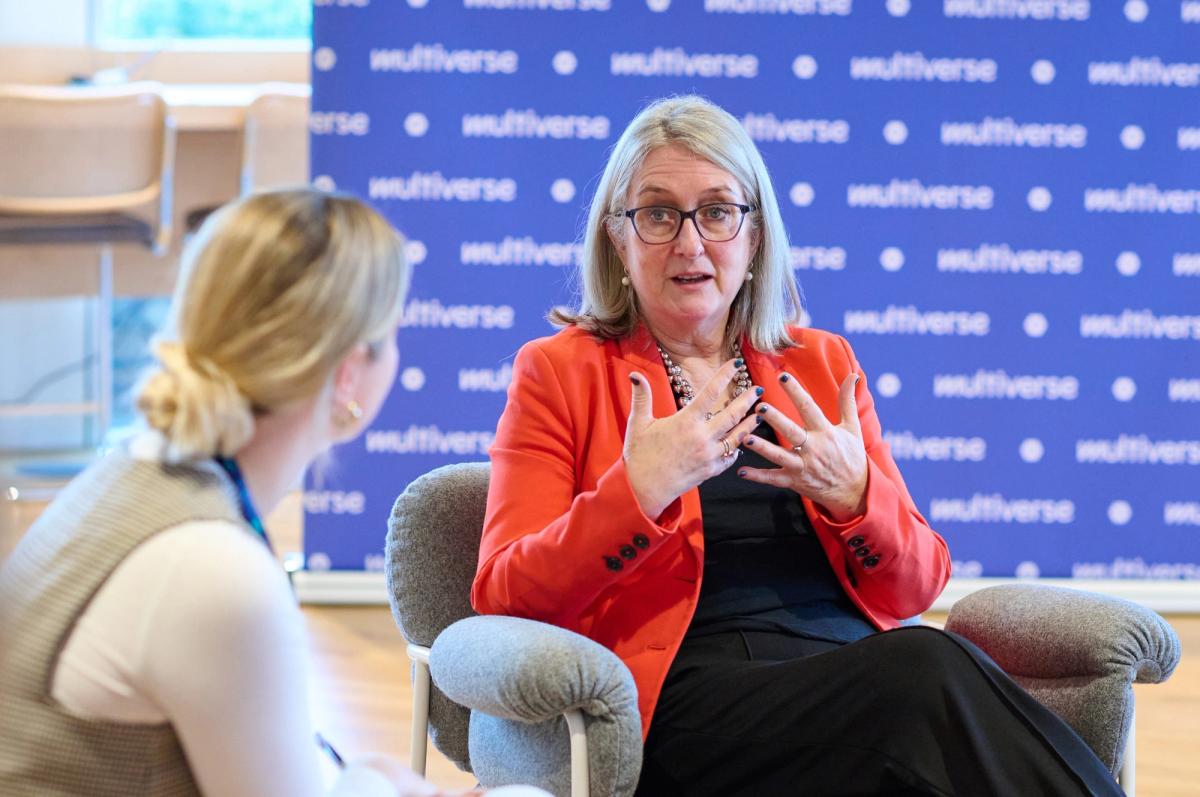
Last week at Multiverse, we were thrilled to host the Minister for Skills, Baroness Jacqui Smith, to discuss the future of apprenticeships and the role of AI. Baroness Smith met learners and alumni to hear their experiences of apprenticeships and what can be done to improve this crucial pathway even further.
“It’s been great to come to Multiverse and to meet some of the apprentices, who spoke to me about the opportunities that they found through apprenticeships,” said Baroness Smith.
Enhancing apprenticeships with technology
With the speed and scale at which skills gaps are emerging in the UK, it’s important to consider how technology can help to shape and deliver effective apprenticeship programmes. Baroness Smith joined CEO Euan Blair for a demonstration of how AI can enhance learning and improve outcomes.
“The world moves quickly, particularly in the area of technology, and we’ve got to make sure that apprenticeships are keeping up,” the Skills Minister reflected. “It’s been really great to see how it’s possible using technology here to personalise apprenticeships for both employers and for the learners, the apprentices, so they’re getting what they need, including support along the way.”

Apprenticeships for every age and every stage
Baroness Smith joined a roundtable to hear the experiences of apprentices, including their thoughts on how the format can evolve — particularly quickly enough to keep up with changes in technical skills.
One point of discussion was how to make apprenticeships suitable for every age and every stage — appealing to both experienced professionals and school leavers. The applied learning offered by apprenticeships delivers significant value for people starting their careers, but equally provides invaluable training for those further along their career journey, looking to reskill.

Some of the group used their apprenticeships to return to the workplace after a career break. Nadine, a Senior Analyst at Citi, applied to Citi's Reactivate Your Career programme and completed a Level 3 Data Technician apprenticeship with Multiverse after an 11-year career break to care full-time for a daughter with special needs. Through the programme, she’s upskilled in data analysis and technology, preparing her to succeed in the next phase of her career.
Others commented on the value of continuous learning: “I found it really heartening — and such a boost to my confidence — that you can still learn, whatever your age,” shared Shubhada Paranjape, Product Engineer at John Lewis Head Office.
Apprenticeships are designed to meet the needs of employers and individuals, which can vary significantly. The group explored ways to make programmes even more accessible by tailoring them to each individual and job role, such as through modular apprenticeships and shorter courses.
With the government exploring ways to introduce greater flexibility in apprenticeships through the Growth and Skills Levy, there may soon be more ways to shape personalised courses that deliver for employers and the wider economy.
The transformative power of apprenticeships
Apprenticeships in AI, data and tech skills can transform careers — and the roundtable attendees shared many positive experiences. As well as upskilling for their roles, several alumni have now established a habit of continuous learning, to futureproof their careers as technologies evolve.
The individual coaching provided during each apprenticeship was highlighted for providing support and advocacy. “My Multiverse coach really helped me with developing soft skills and confidence — it was so powerful to have a safe space to be honest and just say 'I'm struggling with this concept'", reflected Ryner Gold, Level 4 Software Engineering Alumni.
Given the benefits they had gained, the apprentices spoke to Baroness Smith about ways to increase the appetite for apprenticeships among learners and employers. Everyone agreed on the importance of challenging more traditional views around the relative merits of university and apprenticeships — and giving equal kudos to each route.
Engaging teachers and parents at the school stage, and employees and organisations at the professional stage, will help to improve the reputation of apprenticeships.

One former apprentice, Tasnem Chawdhry (Level 3 Data Technician Alumni) is using the confidence she gained during her course to speak with school leavers directly. "As an introvert, I could never have imagined myself stepping out of my comfort zone to connect with others,” she said. “Now, as a Multiverse ambassador, I visit my own school as well as other schools and colleges to inspire and encourage people to pursue apprenticeships.”
Solving skills gaps, fast-tracking careers
Apprenticeships are a powerful means of solving skills gaps for organisations and fast-tracking career growth for employees of all ages and stages. We’re grateful to Baroness Smith for joining us to discuss the future of apprenticeships and how the UK can continue to benefit from this valuable training.
Explore the proposed reforms to the Apprenticeship Levy and what the changes could mean for your business.
Sorry, no results found.